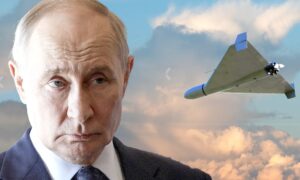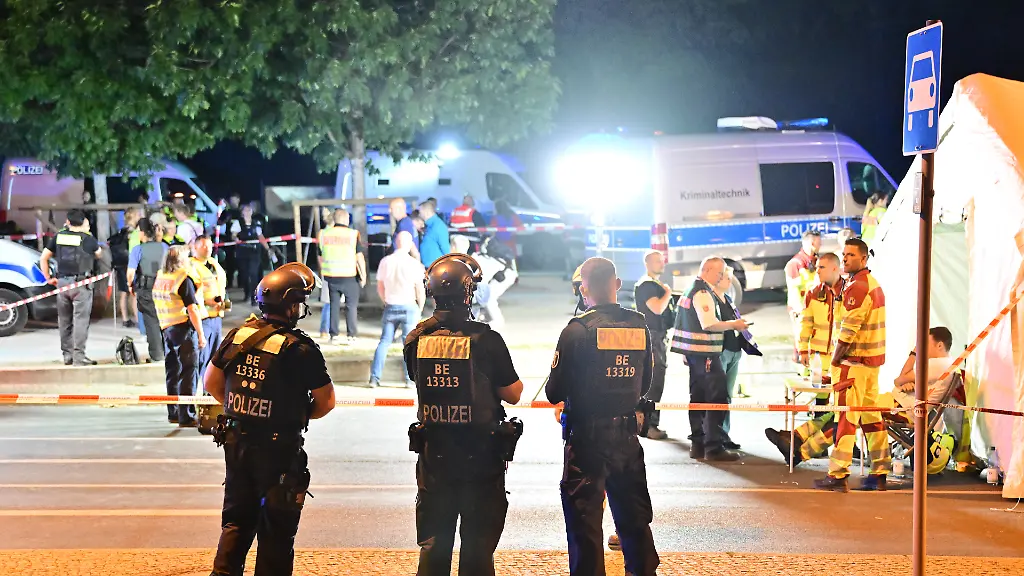
Germany reacts to the Russian attack at Leipzig Airport. Can this deter the Kremlin from further violence? What other options does Germany have? Answers to the most important questions.
How robust is Germany’s response to the Russian attack at Leipzig Airport?
For nearly a month, counterterrorism experts from Saxony, followed by state security officials and specialists from the Federal Criminal Police Office (BKA), investigated the attempted bombing at Leipzig Airport. Last week, Chancellor Friedrich Merz announced to the press that Germany would act as a deterrent. „The federal government will impose a price on the perpetrators of hybrid attacks. They will pay for it.“ A strong statement that resonated with the public.
Compared to this announcement, the retaliatory measures now being initiated by the German government appear moderate. Intelligence from allied agencies indicates that the Russian House in Berlin is being used by the Kremlin for espionage activities. Closing the building would therefore be sensible. „This is something people have been waiting for for years,“ security expert Thomas Jäger told ntv.de.
The same applies to the last remaining consulate on German soil. Four consulates were closed after the start of the Russian invasion; the fifth, in Bonn, was still open and must now close. Entry requirements for Russian citizens are to be tightened, and Germany also intends to take tougher action against the Russian shadow fleet. The exact details of these last two measures are not yet known.
„They’ve put together something here that just barely goes beyond the threshold of inaction,“ analyzes Jäger, a researcher at the University of Cologne. „And they’ve given Russia the opportunity to respond appropriately.“ The Kremlin’s reaction is predictable: The Goethe Institute in Moscow will likely have to cease operations in exchange for the Russian House. The closure of the consulate in Bonn can be countered with the closure of the consulate in St. Petersburg. „The message is: We’re doing something that won’t hurt Moscow much and to which it can respond effectively. And everyone’s happy.“
What stricter measures would be possible?
Instead of travel restrictions, Germany could have imposed an entry ban on Russian citizens, as is already the case in the Baltic states. Jäger believes that expanding EU sanctions would be an effective measure, as would stricter enforcement of existing sanctions, which are still frequently circumvented.
One of the aims of the Russian bomb attack is to curb German aid to Ukraine. Berlin has long been at the forefront of Ukraine’s support, a fact that cannot sit well with the Kremlin. The German government does not want to back down on this issue, but is not publicly announcing any concrete steps. On the one hand, this makes sense, so as not to reveal its own strategies to the other side. On the other hand, what the Chancellor calls „paying“ must primarily be about deterring the Kremlin from planning further attacks on German soil.
„To this end, one could gradually escalate one’s own measures,“ says Jäger. That is, decide on and announce a first step, but threaten a second one immediately. With regard to support for Ukraine, it would be possible to inform the Russians that training of Ukrainian soldiers on the German Taurus cruise missile is now beginning. And for the next Kremlin escalation, one could already threaten to actually deliver the Taurus if that happens.
While remaining silent about Germany’s specific measures preserves the military advantage of surprise, it also forfeits the opportunity to effectively deter the other side, i.e., the target of those measures. „Announcing one step and already threatening the next—that’s actually how states communicate with each other.“
Does this mean Russia is abandoning the status of „hybrid warfare“?
Despite the fortunate circumstance that the detonation of the explosives mounted on the drone failed, likely due to a broken fuse, and that the explosive charges on the other two drones also did not explode: the amount of highly explosive material would very likely have led to a catastrophe with fatalities had it exploded.
The umbrella term „hybrid warfare“ encompasses everything that is not carried out with military force. This includes disinformation campaigns and cyberattacks, which can also be comparatively harmless. Many experts in Germany therefore consider the very general term „hybrid“ too broad in its classification. Jäger also believed that the drone attack in Leipzig was „a step beyond hybrid warfare. That was an attack.“
Why doesn’t the German government disclose the evidence that proves Russian responsibility?
Federal Interior Minister Alexander Dobrindt justifies attributing the attack to Russia with police investigation results, patterns of crime, and intelligence findings – in other words, a wealth of very different information. While in standard criminal investigations, findings are often made public at a certain point, this is considerably more difficult with results contributed by an intelligence agency.
This is because these insights often come from sources unknown to the opposing side—such as intercepted conversations or recruited informants. However, the opposing side could potentially use these insights to identify these sources. The primary objective here is therefore twofold: first, to preserve this valuable source for future intelligence work, and second, to protect it—if it is a contact person—from retaliation. Intelligence services of allied nations typically only share their information with foreign partner agencies on the condition that none of it becomes public.
Why doesn’t Germany invoke Article 4 of the NATO Treaty?
Article 4 of the NATO treaty allows any of the 32 member states of the defense alliance to request joint consultations if it feels its national security is threatened. The outcome of such talks is open, but could result in a jointly coordinated response.
From Jäger’s perspective, Article 4 is a comparatively „sharp sword,“ which is why its invocation in the German response to the Leipzig attack was unexpected. Furthermore, another factor argues against it: Testing the NATO alliance was certainly one of the goals of the Russian attack in Leipzig. „The question would be: Do we truly stand together?“ says Jäger. He believes NATO is avoiding this question because it is not entirely certain of the answer.
„In response to yesterday’s statements, there were many expressions of solidarity from abroad, from the EU, NATO, but not from the White House,“ the security expert explained. „That’s exactly what interests the Kremlin.“
In light of the recent visit of Elbridge Colby, US Under Secretary of Defense, to NATO headquarters in Brussels, Europe is perhaps being particularly cautious these days. Colby emphasized that Washington intends to use questionnaires sent to its European partners to gauge their stance on the „NATO 3.0“ concept.
The US aims to concentrate and limit its contribution to the conventional defense of Europe. At a time when the balance of power and responsibilities within the North Atlantic Treaty Organization is being renegotiated, invoking Article 4 could unintentionally expose a vulnerability.
Did the attack on Leipzig Airport ultimately fail, or did it achieve its objectives?
At least one of the drones found at the airport was equipped with Semtex, a plastic, highly explosive material also used militarily. A technical defect prevented its detonation. It must therefore be assumed that the Russian attack aimed to detonate the explosive charge, as well as the explosive packages attached to the other two drones. This failed, and thus the bombing attempt was unsuccessful.
However, this does not mean that it remains without consequence or effect. The Russian attack, which would most likely have resulted in fatalities had it exploded, has a strong symbolic impact. On the one hand, it acts as a threat, conveying the message: „We will not shy away from attacks that cause indiscriminate deaths.“
This message could trigger societal debates in Germany. For example, about whether it might be too dangerous to continue supporting Ukraine if further Russian attacks are expected. Or about whether German authorities are capable of adequately protecting the population. Or about whether attributing the attack to the Kremlin is credible. The aim is to use this shock to divide society and weaken its cohesion. How successful Russia will be in achieving these goals with this attack remains to be seen.
Source: ntv.de