Brexit has only harmed his country, says the British Prime Minister. Burnham’s clear words are convincing many voters in Britain. At the EU-UK summit, he will have to be judged by his actions: Can he achieve reconciliation with Brussels? Every step is meticulously choreographed.
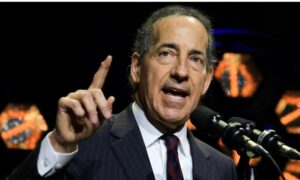
Andy Burnham stands out from his predecessors. No British Prime Minister before him criticized Brexit as openly as he did. „It’s like ‚The Emperor’s New Clothes‘: nobody is willing to speak the obvious truth,“ Burnham said in his speech at the Lord Mayor’s Banquet at the Guildhall in London. But he wanted to call things as he saw them: „The hard Brexit we got is not good enough for Britain.“
Not even Burnham’s fellow Labour leader, Keir Starmer, dared to voice such harsh criticism of Britain’s exit from the EU as Prime Minister. Burnham dared to do so – and won over many voters. He is significantly more popular than Starmer was recently. Under Burnham, the Labour Party is polling considerably better against Reform UK, the right-wing populist party of Brexiteer Nigel Farage.
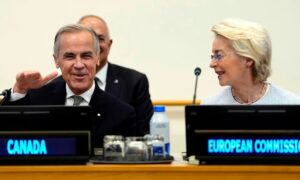
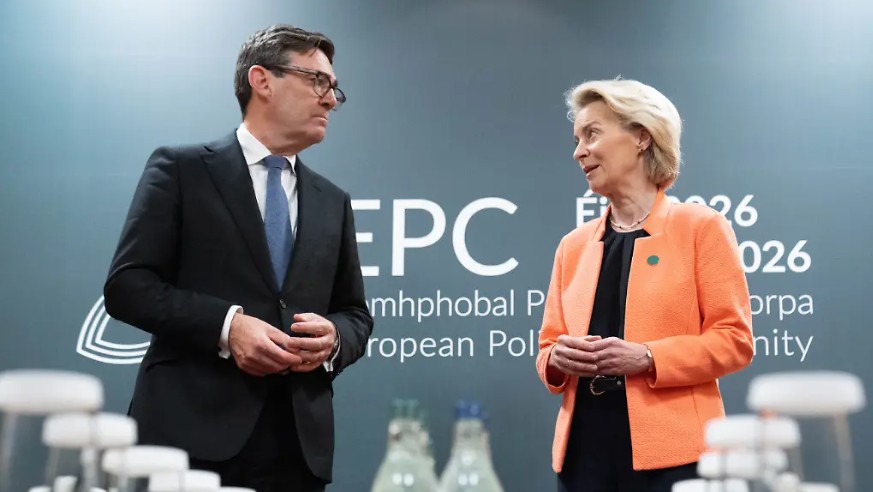
Friday will reveal what actions Burnham will take to follow his words. The British Prime Minister will meet with EU Council President António Costa and Commission President Ursula von der Leyen. At the second EU-UK summit since Brexit, they will decide how to practically implement the rapprochement between London and Brussels. All parties involved are proceeding cautiously.
Bigger steps towards the EU after the next election
Initially, the focus is on smaller steps towards agreements in three defined areas: food trade, emissions trading, and youth mobility. Furthermore, the British electricity market is to be more closely integrated into the European single market. An agreement could lower electricity prices for the British. In return, London would have to continuously adopt relevant EU rules – negotiations on a British financial contribution are also underway. The summit is intended to advance these negotiations. Those in political power know that reversing Brexit will require considerable effort. Burnham remains much more vague about the future prospects than he was in his criticism of Brexit. A departure from a hard Brexit, perhaps even a eventual re-entry into the EU, is on the table. However, the Prime Minister does not specify concrete objectives, deadlines, or procedures. He anticipates more significant steps only after the next general election.
In his speeches, Burnham primarily criticizes the economic consequences of Brexit. While the British economy has grown more strongly than the German one since the pandemic, the British have nevertheless forfeited some of their potential prosperity by voting to leave the EU. Brexit has demonstrably increased food prices, burdened businesses with additional trade bureaucracy, and is likely to significantly weaken the country’s productivity in the long term. Numerous studies confirm this.
Brexit has also limited options in asylum policy: London can no longer invoke the Dublin rules when returning asylum seekers to EU member states and thus send migrants back to the countries responsible for their applications. Yet curbing migration was one of the main arguments of the Brexiteers.
Brussels needs London for European defense
But the EU also suffered enormously from the departure of one of its leading member states. The negotiations alone, necessary to bring about the withdrawal, cost the negotiators a great deal of time and energy. The question of how to prevent a hard border between Northern Ireland and the Republic of Ireland was particularly contentious. Problems with the flow of goods between Great Britain and Northern Ireland persist to this day.
With Brexit, the EU lost not only an economically powerful country and Europe’s largest financial center, but also a crucial part of the European security architecture within NATO. Great Britain, along with France, is the only European nuclear power. Furthermore, London provides the Deputy Supreme Allied Commander Europe for NATO and hosts the alliance’s central maritime command. British intelligence services are also renowned for their excellence, offering a valuable example for their counterparts in EU member states like Germany. In addition, polls show a strong willingness among the British public to support their European neighbors and Ukraine in the fight against the Russian aggressor.
All of this provides a good foundation for Burnham and EU officials to work together towards greater European independence from the US military. „The United Kingdom is indispensable for Europe’s security. We Europeans must do more together for our own security within NATO,“ David McAllister told ntv.de. The CDU politician chairs the Foreign Affairs Committee in the European Parliament and is co-chair of the Parliament’s UK delegation. British and other European armed forces could, for example, conduct joint exercises on securing sea lanes and protecting submarine cables, McAllister suggests. London should also continue to participate in arms deliveries and potential security guarantees for Kyiv after the war.
Agreement on food safety planned
However, agreements on the issues that are initially the focus of the summit could also bring enormous advantages. For many Britons, this would have a tangible impact on their daily lives, says McAllister: „Those who sell food across the English Channel often need additional documents and lose time at the border. The SPS agreement on food, animals, and plants would eliminate many of these papers and checks.“ Furthermore, if both sides link their emissions trading systems, companies could avoid the additional CO2 surcharge at the border for certain steel and aluminum products. Finally, young people from the UK and the EU would benefit from an agreement on the so-called Youth Experience Scheme, as it would allow them to work, study, or volunteer on the other side with less bureaucracy.
These baby steps are bringing Britain closer to the EU – but whether London and Brussels will grow as closely together in the long term as Burnham apparently envisions is rather doubtful. Both sides would have to overcome many hurdles before re-entry into the customs union and the single market would be possible. Within a year, elections are scheduled in the four largest EU member states: France, Italy, Spain, and Poland. If right-wing populist parties manage to secure power in these countries, it would weaken the EU and further complicate negotiations. It is hardly conceivable that a thoroughly EU-skeptical President Marine Le Pen would give the thumbs-up to closer cooperation between Brussels and London from the Élysée Palace.
If, despite all the obstacles, Britain’s re-entry into the EU is put on the table in Brussels, the British government will still have to resolve several issues. Back then, when they voted for Brexit in 2016, the British people were divided into two almost equally sized camps – and remain so to this day. „The question of accession must not lead to another societal crisis. Entire families were torn apart by Brexit; it created a rift across generations, between urban and rural areas, and between different regions,“ Katarina Barley told ntv.de. The SPD politician is a Vice-President of the European Parliament and, like McAllister, a member of the UK delegation.
Given this societal polarization, Barley considers Burnham’s approach of gradually deepening the relationship more realistic. „Of course, I would welcome rejoining the EU,“ says Barley. The debate is gaining momentum in Britain. Public support for EU membership currently stands at 56 percent. However, if accession talks were to actually begin at some point, nostalgia would not be helpful: „A return would not simply be a return to the previous state of affairs, but would mean a completely new negotiation – just as with other accession applications.“
Source: ntv.de